
(757) 816-1406
Electrical Repairs | Hampton Roads
We find what is causing it and show you. You decide what is best for your home.
Electrical troubleshooting means tracing a problem, like a dead outlet, flickering lights, or a breaker that keeps tripping, back to its cause before anything gets replaced. Current Contracting tests the circuit, finds where it fails, explains what we found, and puts the repair and cost in writing for homeowners across Hampton Roads.
Stakes
A dead outlet can be a tripped GFCI two rooms away. A tripping breaker can be too much load, a damaged wire, or a worn breaker.
Swap parts without finding the cause, and the problem tends to come back. Usually at a worse time.
WHAT YOU GET
You will know what caused it, and where it is.
The repair the cause calls for. Not parts swapped in to see if it helps.
The work and the cost, before anything starts.
GUIDE
Problems that come and go are some of the hardest to live with. You start to wonder what is happening behind the wall.
We test the circuit with you, show you what we find, and explain what it means. If the cause is small, the fix stays small.

THE PLAN
1
Tell us what is happening and when it started.
2
test the circuit, and explain what we find.
3
then decide.
THE ZOOM
Often the outlet itself is fine. It sits downstream of a GFCI outlet that tripped in a bathroom, the garage, or outside. Other times a connection has worked loose inside the box.
One flickering fixture usually points to the bulb, the fixture, or a dimmer that does not match LED bulbs. Flickering across the house can point to a loose connection in the panel or at the service, which is worth checking soon. Sometimes the problem is not in your home at all. An issue with the incoming utility power can make lights flicker, and we can tell whether the cause is inside your home or on the utility side.
A breaker trips for a reason. Too much on the circuit, a short, a ground fault, or a breaker that is wearing out. Each one has a different fix.
When a group of outlets or lights stops working and the breaker looks fine, the break is somewhere along the run. Finding it is the job.
THE ZOOM
If the breaker trips again right away, leave it off. Resetting it over and over is not a fix.
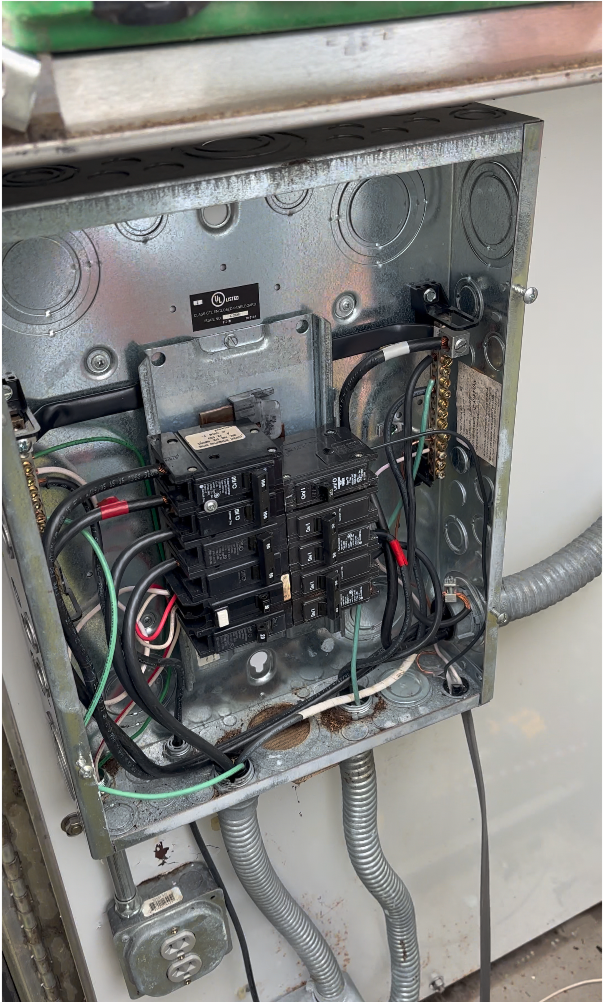
THE ZOOM
If you can reach the panel safely, turn that breaker off and leave the device alone. If you see smoke or fire, get out of the house and call 911.

WHY THIS MATTERS
Most of the time it is a repair. A worn outlet, a loose connection, a failed breaker.
Sometimes the problem points to something larger, like a panel that is out of room or older wiring. When that happens, we show you why and let you decide what to do and when.

WHY THIS MATTERS
It depends on the cause, and that is hard to know before someone tests the circuit.
A tripped GFCI and a damaged wire inside a wall are not the same job.
So we find the cause first and put the repair cost in writing before any work starts. There is no charge for the assessment.

WHY THIS MATTERS
Send a photo or a short video of the problem, and tell us when it happens. We will tell you what we see.

When the outlet or switch itself is worn out.
If the fixture is the problem, or it is time for a new one.
When one appliance keeps tripping a shared circuit.
Repairs flagged on an inspection report.
If the trouble traces back to the panel.
FAQ
Many outlets are protected by a GFCI outlet somewhere else on the circuit, often in a bathroom, kitchen, garage, or outside. Press reset on those first. If it still does not work, a loose connection or a failed outlet is likely, and it is worth having it tested.
One flickering fixture usually points to the bulb, the fixture, or a dimmer not made for LED bulbs. Flickering in several rooms can point to a loose connection in the panel or at the service, and should be checked soon. Sometimes the cause is on the utility side, and an electrician can tell the two apart.
Usually one of four reasons: too much on the circuit, a short, a ground fault, or a worn breaker. Each needs a different fix, so testing comes first.
Resetting it once is reasonable. If it trips again right away, leave it off and have the circuit checked. A breaker that keeps tripping is telling you something.
Often, yes. We test the circuit to narrow down where it fails before opening anything, so any wall work stays as small as possible.
No. The assessment is free, and you decide what happens next.
We will find it, explain it in plain English, and put the fix in writing. Then you decide.