Whole-home surge protection is a device installed at your electrical panel that helps limit voltage spikes before they reach the circuits in your home. It works alongside plug in surge strips, not instead of them. Current Contracting checks your panel and grounding, explains what it covers, and installs it for homes across Hampton Roads.
Stakes
What in your home would you least want to replace after a storm?
Refrigerators, HVAC systems, washers, ranges, TVs, and computers all have electronics inside.
A power strip protects what is plugged into it. It does nothing for the HVAC system or the range.
WHAT YOU GET
What you get before any surge protector goes in
Clarity.
You will know what a panel surge protector covers, what it does not, and whether your grounding supports it.
The right fix.
A device matched to your panel, with the grounding checked. Not a box added to a panel that cannot support it.
A plan in writing.
The work and the cost, before anything starts.
GUIDE
You should not have to guess what a surge protector really does.
Surge protection often gets sold with big promises. The honest version is simpler.
It helps reduce damage from many surges. It is not a guarantee, and nothing stops a direct lightning strike. We explain what it does in your home, so you can decide if it is worth it.
From outside the house. Nearby lightning, storms, and switching on the utility lines.
From inside the house. Large appliances and motors cycling on and off, like an HVAC compressor.
Coastal storms and summer thunderstorms are part of life in Hampton Roads. That is often what gets people asking.
THE ZOOM
Whole-home or plug in surge protection?
They work best together. The panel device handles larger surges coming in. Plug in strips add a second layer at the outlet.
Whole-home, at the panel
Helps limit surges coming in on the service. Covers hardwired equipment a power strip cannot reach, like HVAC and range controls.
Plug in, at the outlet
Protects sensitive electronics like TVs and computers where they plug in.
WHY THIS MATTERS
Why does grounding matter?
A surge protector sends extra voltage to ground. If the grounding and bonding at your home is weak, old, or missing, the device cannot do its job well.
Older homes often need grounding brought up to current code. We check it first and tell you what we find.
WHY THIS MATTERS
Is surge protection required by code?
Newer code editions call for surge protection when the service on a home is replaced or upgraded.
Whether that applies depends on the code edition your locality has adopted. Planning a panel replacement or service upgrade? That is a good time to ask.
Common questions about whole-home surge protection
Is whole-home surge protection worth it?
It depends on what you have to protect and on your panel. It helps reduce damage from many surges to hardwired appliances and electronics. It is not a guarantee. We explain what it covers in your home so you can decide.
Does a whole-home surge protector protect against lightning?
It helps with surges from nearby lightning and storms. Nothing stops a direct strike. That is why we call it help, not a guarantee.
Do I still need surge protector power strips?
For sensitive electronics, they are a good second layer. The panel device handles larger surges coming in, and plug in strips add protection at the outlet.
Where is a whole-home surge protector installed?
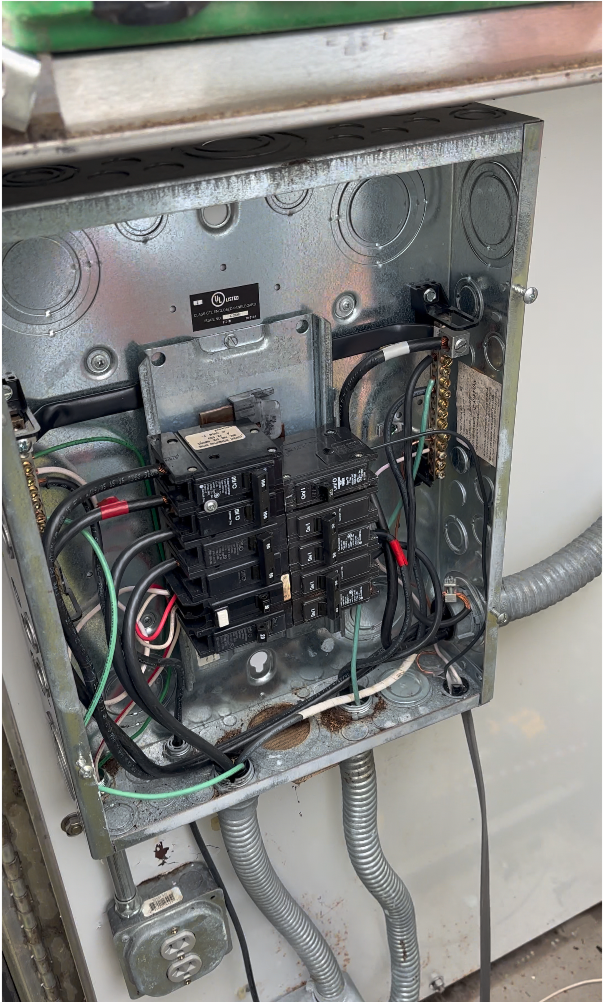
At or next to your main electrical panel, wired into it. Your grounding needs to be in good shape for it to work well.
Is surge protection required by code in Virginia?
Newer code editions call for it when a home service is replaced or upgraded. What applies depends on the code edition your locality has adopted. We tell you before the work starts.
How long does a whole-home surge protector last?
It depends on how many surges it absorbs. Many units have an indicator light that shows when they need replacing. It is worth checking after a big storm.
Want an honest answer on whether surge protection makes sense for your home?
We will check your panel and grounding, explain it, and put it in writing. Then you decide.